Planting trees in a dry climate has been a learning journey for us at Tinwald Farm in Central Otago where we began reintroducing trees to the landscape in 2017. At first, we focused on gullies and other areas where moisture might naturally support young trees. However, beyond digging a hole and putting in a plant, we gave little thought to a more robust method for establishment. Unsurprisingly, many of those early trees failed to thrive — impacted by moisture stress, drying winds, and a lack of nutrients at planting.
We quickly realised that in our semi-arid environment, irrigation is essential — especially in the first few years. Over time, we reviewed our early failures and developed a planting method that works for us, shaped by our shift toward soil health and regenerative practices.
One of our key insights came from experimenting with wool, a 100% natural product with excellent soil health benefits. We found that wool breaks down slowly over four to six years, providing a source of nutrients and improved soil insulation.
Since 2020, as part of our transition away from conventional farming, we’ve been breeding beneficial soil microbes on-farm using locally sourced ingredients tailored to support diverse microbial communities. We saw the opportunity to bring together these learnings into a regenerative tree planting approach that improves establishment and survival.
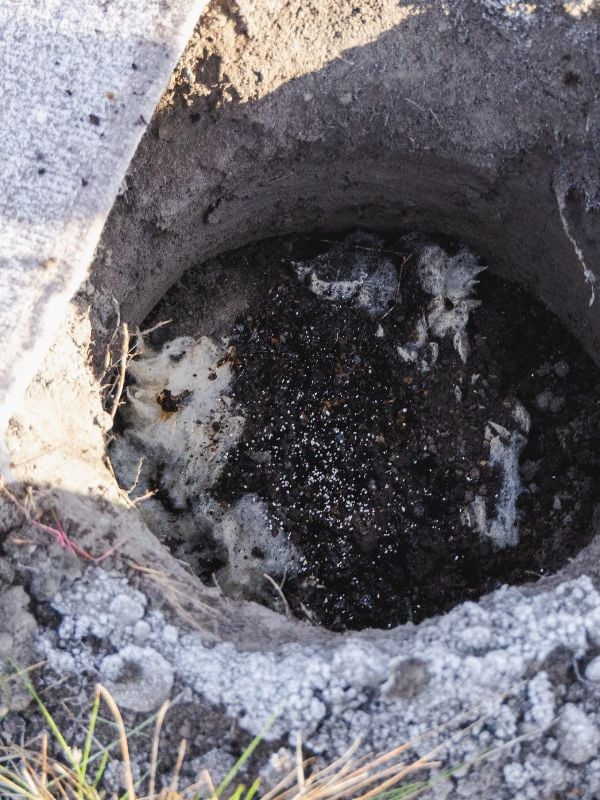
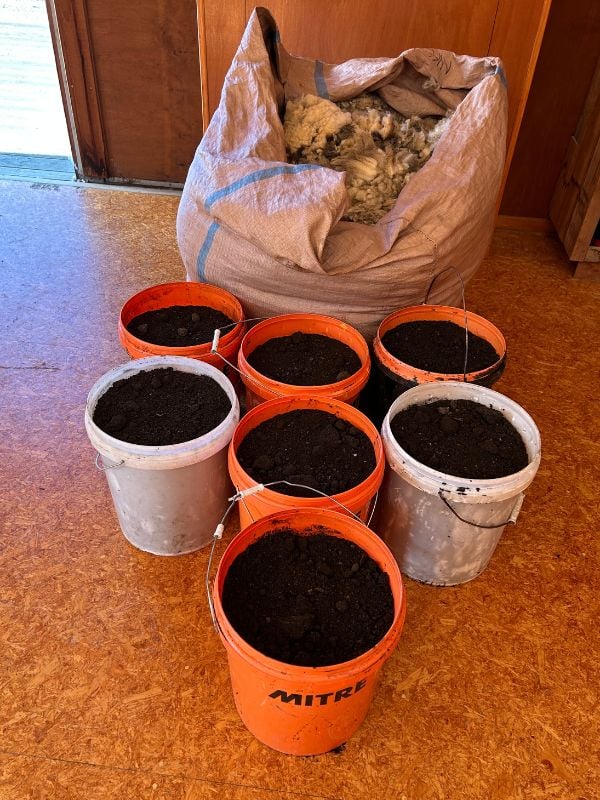
Our approach to planting trees in a dry climate combines irrigation, soil biology and wool mulch to support young trees. Our current method begins by placing a small amount of wool at the bottom of the planting hole. We do not use wool dags for this purpose, as their high nitrogen content can lead to root burn through nitrogen toxicity. Fleece wool, by contrast, offers a slow-release source of nitrogen and micronutrients and enhances soil moisture retention.
Next, we add a microbial inoculant (produced on-farm to meet the US Soil Food Web Foundation’s BioComplete™ Compost standard), along with high-quality vermicast, minced seaweed (to support root development), mycorrhizal fungi spores, and rhizobia (when planting legumes).
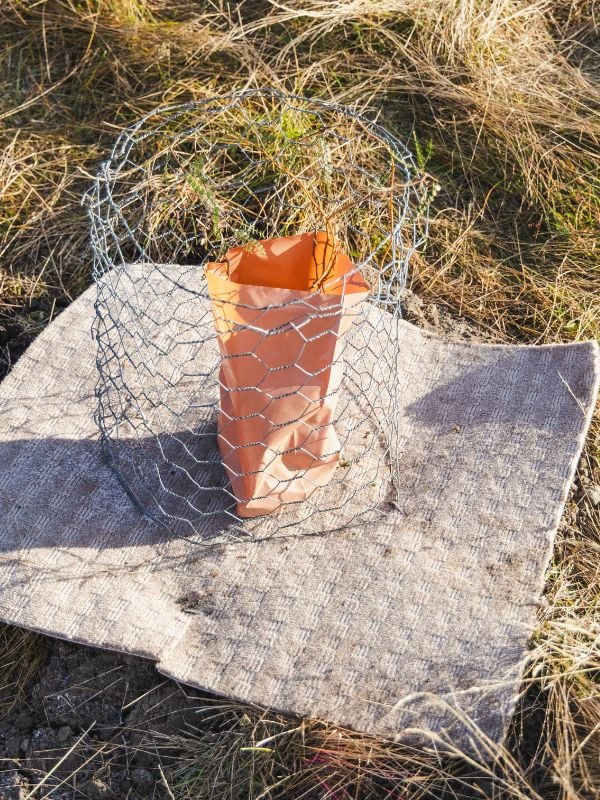
The tree is then planted using our native soil to bed it in. On the surface, we apply a generous layer of wool fleece, followed by a square of recycled wool carpet pinned in place to suppress weed growth. In areas where livestock or rabbits are present, we add a protective tree guard.
The result is a system that supports nutrient availability, microbial diversity, moisture retention, and long-term tree survival — all grounded in regenerative practice and continuous learning.