
Initially we read widely and listened to the very many experiences of others who have gone before us. We went on courses, did workshops and explored what options were available and what might work for us. We started with annual cover crops which possibly wasn’t the right move, but did look beautiful and made us feel very good. We trialled changes in our grazing and thought deeply about how we might be able to sympathetically farm the land whilst also making an income.
Over time we settled on three areas for the future focus of our enterprise:
First and foremost:Soil microbial health. We became convinced of the importance of the life in our soils. Not just the worms, spiders and other bugs you’ll see when you dig up some soil. But rather the billions of micro-organisms that cannot be seen by the naked eye but provide essential life services to soil and plants. Soil microbes play a huge and under-appreciated role in water holding capacity, building carbon in soil, cycling nutrients to plants, and building soil structure. Conventional farming methods (soil disturbance and the application of chemicals) had led to a fall in microbial biomass.
Some of our paddocks only had bacteria left.
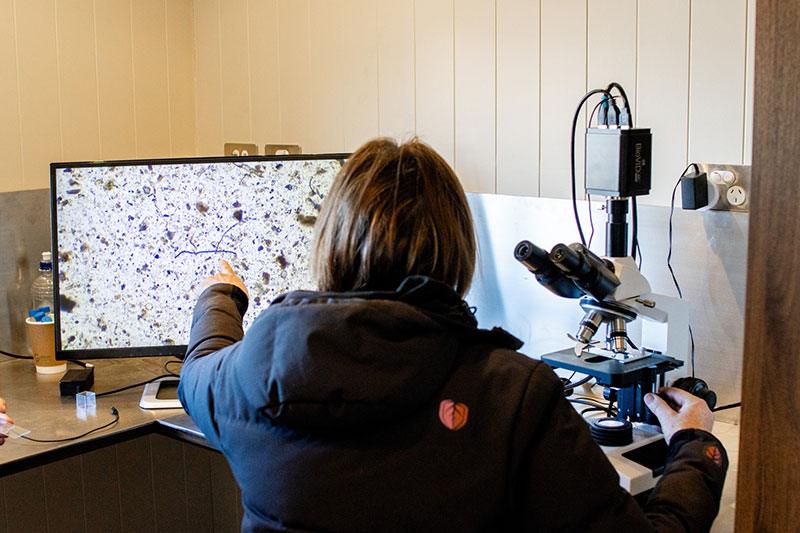
For us, redressing the lack of diverse micro-organisms in our soils, was worthy of study and investment. Since 2020, we have trained with the SoilFoodWeb School in the US, have constructed an on-farm laboratory for soil testing. And learnt methods for breeding diverse soil microbes that we can use to inoculate soils. We use field studies and trials to see what might be possible with soil microbes and explore which methods work best. We monitor the activity and our progress. In the future we hope that restoring a fully functioning soil ecosystem will deliver benefits to the farm in terms of healthier plants and livestock.
Our second focus is grazing. We’ve made the study of grazing methods a top priority. Over time we’ve transitioned to diverse perennial pastures in our paddocks. We apply no synthetic nitrogen, pesticides or insecticides. We want to secure the health of our grassland pastures and the grazing ruminants (sheep and beef) that we farm. We provide our livestock with access to free choice minerals for them to balance what they need in terms of minerals. Our grazing methods started with rotational grazing and moved through many other variations, we currently practice a form of adaptive grazing which provides increased density during grazing and longer recovery periods between grazings. We use livestock across the farm, including in the vineyards. And carefully monitor their impact on our soils. We participate in the Savory Institute’s verification programme (called Ecoglocical Outcome Verification) where assessors visit the farm annually to make their independent assessment of whether we’re truly regenerating our land.
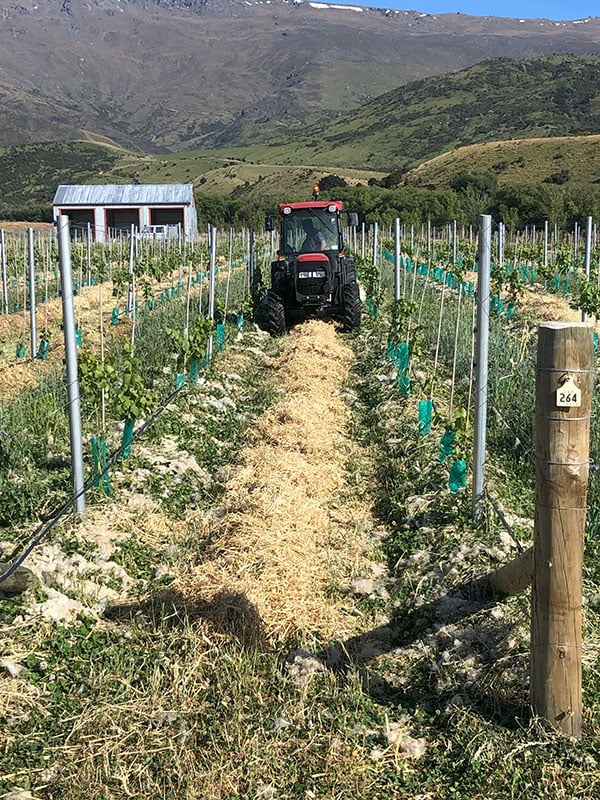
Historically a sheep and beef property, Tinwald Farm has embraced diversification as our third pillar. We planted Pinot Noir vineyards and now produce a single-vineyard wine that is also EOV accredited.
We also share our farm through tourism. We offer carefully curated experiences that might include participating in our day-to-day life, exploring our trails and even meeting our Clydesdales. We host corporate meetings and training events in our modern meeting venues, allowing an opportunity for a deep dive into regenerative agriculture and our journey for those who want to learn.
We’re still learning, but we believe that Tinwald Farm can be productive and profitable while restoring ecological health. Every decision we make now considers its impact on the soil, the animals and the wider landscape.
This is just the beginning of the story.