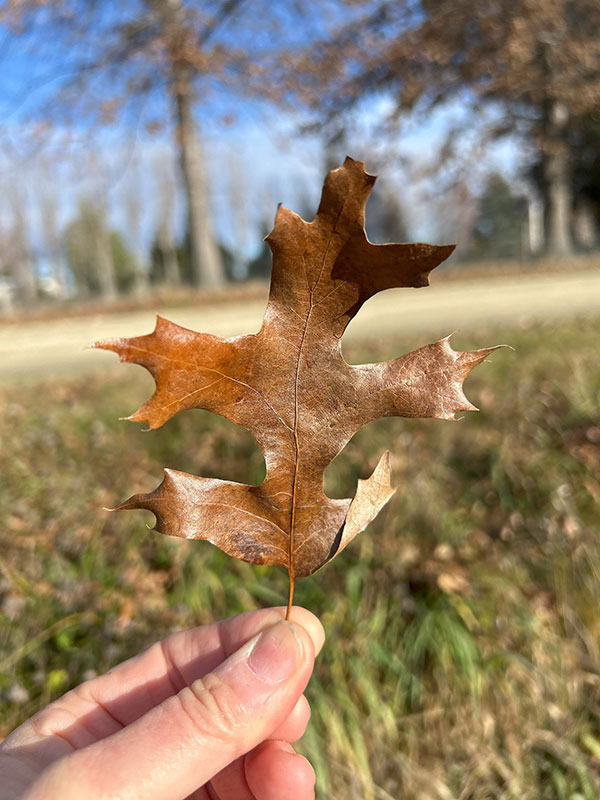
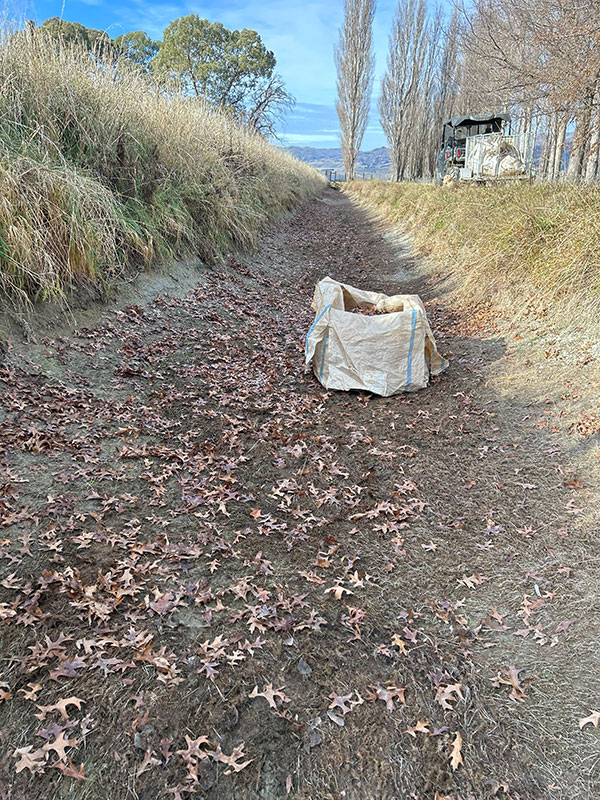
Annual harvests are part of life on every farm. In the Autumn and Winter we’ll be busy harvesting an unusual crop on the farm … leaves!
Many gardeners will tell you of the value of leaves and leaf mulch in gardens. Some go to lengths to collect up fallen leaves in the Winter and place them in garden beds and under trees, where they provide insulation from the elements and slowly release elements over time as they decay.
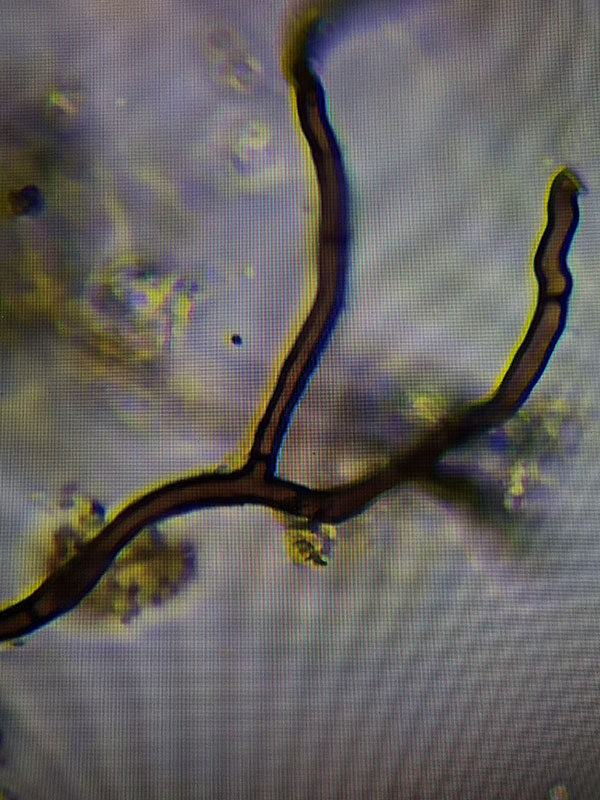
At Tinwald Farm our farming practice involves using compost as a medium for breeding soil microbes. Over the years we have trialled many ingredients for making compost with the aim of producing a microbially diverse product with which to inoculate our soils. One year we decided to add two buckets (40 Litres) of dead leaves to a 1,000 Litre batch. Once finished, we noticed this particular batch of compost contained greater fungal biomass and had more good fungi (lovely dark chocolate brown colour with lots of branching) than any of our past piles. We went on to make leaf mulches (made only with leaves) and noticed incredible fungal biomass in the resultant broken down product. Whilst we generally understand wood chip to support fungi (especially when seasoned and moist), fallen deciduous leaves are generally better for boosting fungal biomass. This is because leaves decompose faster, have softer tissue and thinner cell walls and support a wider range of fungi. Persuaded by the value of adding leaves to speed up the breeding of fungi we have since made dedicated leaf mulch piles which we add to our microbial soil inoculants to increase the volume and diversity of fungal populations.